





Newsletter Subscribe
Enter your email address below and subscribe to our newsletter

Enter your email address below and subscribe to our newsletter
Tracking AI’s Impact on Humanity
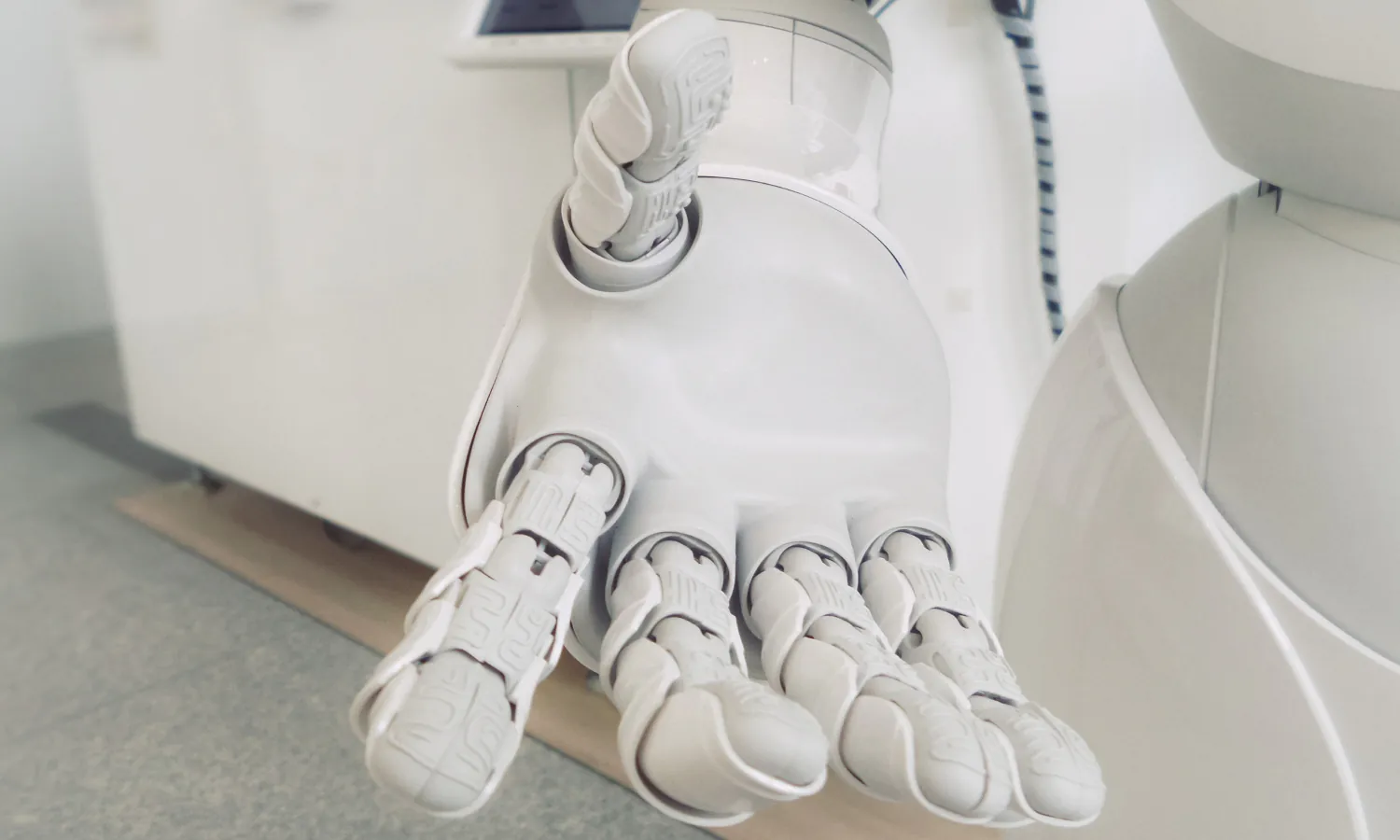
The Internet Changed How You Access Information. AI Agents May Change How You Live.
For nearly three decades, the internet has shaped how you learn, work, shop, communicate, and make decisions. Every digital platform you use today – from search engines to social media apps – was built around one basic idea:
Humans manually interact with the internet.
But that structure is beginning to change.
A new generation of artificial intelligence called AI agents is emerging rapidly, and many technology experts believe it could become the next major internet revolution.
Not because AI agents are simply smarter chatbots.
But because they may fundamentally change how digital work happens.
Instead of helping you find answers, AI agents are being designed to complete actions, make decisions, organize workflows, interact with software, and eventually manage entire digital tasks on your behalf.
That difference is enormous.
The internet connected humans to information.
AI agents may connect intelligence directly to action.
And if that transition happens at scale, it could reshape business, employment, education, digital behavior, and even the psychological relationship humans have with technology itself.
An AI agent is an intelligent software system capable of completing goals autonomously.
Unlike traditional AI chatbots that mostly respond to prompts, AI agents are designed to:
Think about the difference this way.
A chatbot helps you answer questions.
An AI agent helps you complete work.
For example, today you might ask AI:
“What are the best laptops for students?”
An advanced AI agent, however, may eventually:
Instead of simply generating information, it performs digital operations.
That is why many researchers see AI agents as something much larger than another AI trend.
Most people first experienced artificial intelligence through conversational tools like ChatGPT or AI writing systems.
These tools impressed people because they could:
But AI agents introduce a much bigger shift.
They are transforming AI from a passive assistant into an active operator.
That changes the role AI plays in society.
For decades, software waited for humans to instruct every action manually.
AI agents aim to reduce that dependency.
Instead of opening multiple tabs, switching between apps, and manually coordinating digital tasks, you may increasingly rely on AI systems to handle those processes automatically.
The internet may slowly evolve from:
humans navigating platforms
to:
AI systems navigating platforms for humans.
That transition could redefine how the digital economy works.
Most online activity still requires constant human effort.
Even simple tasks involve repetitive actions:
This invisible digital labor consumes a huge amount of human attention every day.
AI agents are being developed specifically to reduce that friction.
Imagine telling your AI:
“Plan my entire business trip for next month within my budget.”
Instead of giving suggestions, the AI agent could:
The internet becomes less about browsing and more about delegation.
That is a major structural shift.
The reason businesses are racing toward AI agents is not simply excitement around artificial intelligence.
It is economics.
Large companies see AI agents as a way to dramatically improve productivity while reducing operational costs.
An AI agent can potentially:
This creates enormous commercial incentives.
Businesses are already experimenting with AI agents for:
In many industries, companies are no longer asking:
“Should we use AI?”
They are asking:
“How much of our workflow can AI eventually manage?”
That question alone signals how serious this transformation may become.
The biggest changes may not initially look dramatic.
Instead, they may quietly reduce the amount of digital effort required in everyday life.
You may begin noticing:
Over time, AI agents could become deeply integrated into how people manage work, learning, finances, communication, and personal organization.
The long-term effect may feel similar to what smartphones did to modern life.
At first, smartphones seemed convenient.
Eventually, they changed human behavior entirely.
AI agents may follow a similar pattern.
One reason AI agents matter so much is because modern economies rely heavily on digital coordination work.
A surprisingly large percentage of jobs involve:
These are areas where AI agents may become highly effective.
That does not automatically mean all jobs disappear.
But it does mean many jobs could evolve significantly.
Workers may increasingly shift from:
The most valuable human skills may become:
In other words, AI agents may push humans toward more uniquely human forms of work.
But transitions like this are rarely emotionally easy.
Most discussions about AI focus heavily on technology.
Far fewer discussions focus on psychology.
Yet the emotional impact may become just as important as the technological one.
For decades, work has provided humans with:
As AI agents become more capable, many people may begin questioning where they fit into future economic systems.
That uncertainty can create:
Not because humans dislike innovation.
But because rapid technological shifts often challenge how people define personal value and professional relevance.
This is one of the most important conversations often missing from mainstream AI coverage.
And it directly connects to Reemoto’s larger focus:
tracking AI’s impact on humanity.
Today’s internet business models largely depend on human attention.
Search engines depend on clicks.
Advertising depends on views.
Websites depend on traffic.
But AI agents may eventually bypass traditional browsing behavior entirely.
Instead of visiting multiple websites yourself, your AI agent could gather information, compare options, and complete transactions automatically.
This creates serious questions for:
If AI agents become the primary digital intermediaries, the structure of the internet economy itself may need to evolve.
That is why many experts compare AI agents to the early days of the internet revolution itself.
The next major divide in society may not be about internet access.
It may be about AI adaptability.
People who understand how to work effectively with AI systems could gain major advantages in:
Meanwhile, people who ignore AI entirely may struggle to compete in increasingly automated environments.
This could create a future where AI literacy becomes as essential as digital literacy once was.
Knowing how to collaborate with intelligent systems may become one of the most valuable skills of the next decade.
Like every major technological shift, AI agents also introduce serious risks.
One concern is overdependence.
If humans increasingly outsource thinking and decision-making to AI systems, critical thinking skills may weaken over time.
Another issue is privacy.
AI agents require deep access to personal information such as:
That creates major security and ethical concerns.
There is also the possibility of manipulation.
Highly personalized AI systems could eventually influence:
The more powerful AI agents become, the more important transparency and regulation may become as well.
The original internet took years to become mainstream.
Smartphones evolved gradually.
AI agents may spread much faster because the infrastructure already exists.
The world already has:
That means AI agents are building on top of an already-connected digital world.
Technology often moves faster than society’s ability to psychologically adapt to it.
That may become one of the defining challenges of the AI era.
The rise of AI agents does not necessarily mean humans become obsolete.
But it does mean passive adaptation may become risky.
The people most likely to succeed in the AI era may be those who:
In many ways, the future may reward people who know how to direct intelligence rather than simply perform repetitive digital labor.
That is a major shift in how work and value may function in the coming years.
The internet revolution changed how humans access information.
The AI agent revolution may change how humans interact with reality itself.
That is why this moment matters.
AI agents are not simply another productivity tool or temporary technology trend.
They represent a possible transformation in:
The biggest challenge may not be whether AI agents become powerful.
It may be whether humanity can adapt emotionally, ethically, and socially fast enough to live alongside increasingly autonomous intelligence.
Because while AI systems are learning how to operate more like humans, humans are simultaneously learning how to remain valuable in a world increasingly shaped by intelligent machines.
And that may become one of the defining stories of the next internet era.
AI agents are intelligent software systems that can autonomously complete tasks, make decisions, and interact with digital tools to achieve goals.
Chatbots mainly generate responses and conversations. AI agents go further by executing tasks, interacting with software, and managing workflows independently.
They shift AI from simply providing information to actually performing digital actions and automating complex processes.
AI agents may automate repetitive digital work, which could transform many industries and reshape job responsibilities over time.
Customer support, marketing, software development, administration, education, and business operations are among the industries most likely to see early disruption.